The Pantry First Method: How Knowing What You Have Saves More Money Than Couponing
Before modern grocery stores and same-day delivery, families couldn’t afford to lose track of what they owned.
A well-managed kitchen wasn’t just a place to store food—it was a household security plan. Homemakers kept track of what was on the shelves, what needed to be eaten next, and what had to be preserved for the months ahead. Every jar, sack, and preserved harvest represented hard physical work and valuable family resources.
Today, most of us no longer rely on root cellars or handwritten ledgers, yet modern households face a remarkably similar challenge:
We simply don’t know what we own.
For years, I assumed my grocery budget problem was happening in the checkout aisle. The real issue was sitting quietly in my pantry. I would draft a shopping list, drive to the store, and come home only to discover I already had two boxes of pasta tucked behind a bag of flour.
The problem wasn’t that I needed better coupons. The problem was that I lacked a simple system to track what was already in my kitchen.
The Hidden Cost of “Pantry Blindness”
We’ve all experienced Pantry Blindness—that exact moment food slips out of view and disappears from memory.
Imagine preparing your weekly grocery list:
- You vaguely recall running low on pasta, so you pick up two more boxes.
- Unpacking at home, you spot three unopened boxes tucked behind a bag of rice.
- The following week, you buy barbecue sauce because you aren’t sure if you have any left. A month later, you find two unopened bottles hidden behind the condiments.
These duplicate purchases feel minor in the moment, but they add up fast. Most households don’t blow their food budgets on extravagant ingredients; they blow them on duplicates, forgotten items, and food that expires before it ever touches a plate.
The issue isn’t what’s on your shopping list. The issue starts before the list is ever written.
What Is the Pantry First Method?
The core principle of the Pantry First Method is straightforward:
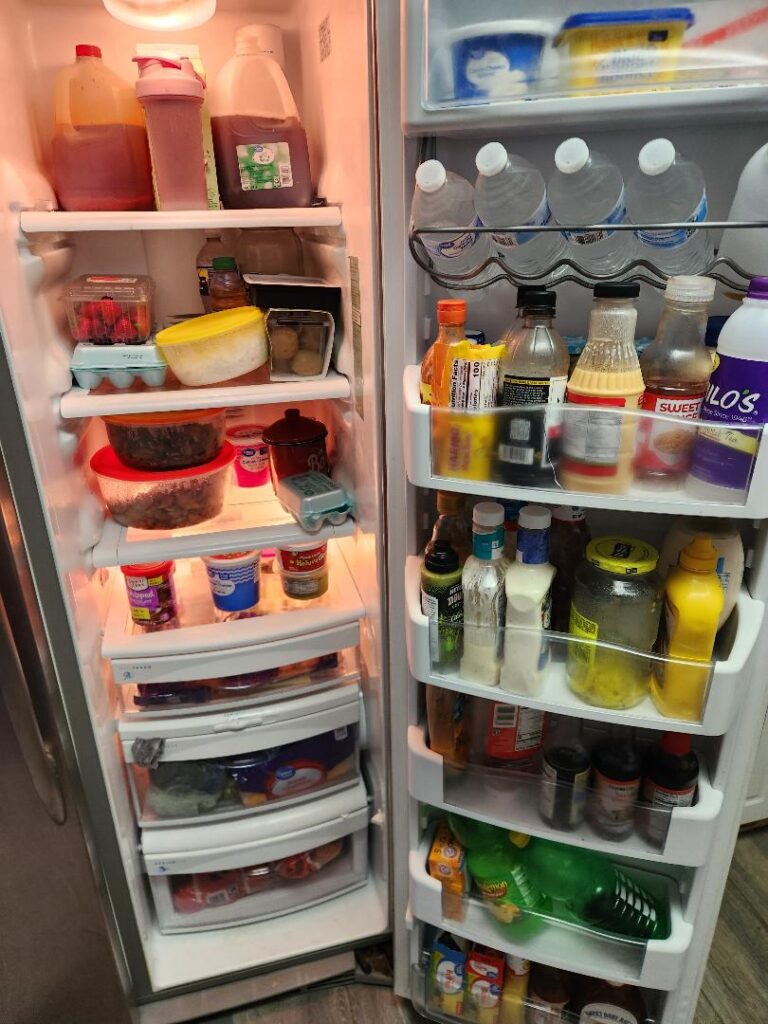
Before you write a shopping list, shop your pantry, refrigerator, and freezer first.
Instead of starting with store flyers, meal apps, or sudden cravings, begin with an inventory of what is already available in your home. This subtle shift changes your primary question from:
- “What do I need to buy?”
to:- “What do I already have that I can use?”
Why It Can Save More Than Couponing
Couponing saves money on items you buy. The Pantry First Method saves money by helping you avoid buying altogether.
- A $0.50 coupon saves you fifty cents.
- Skipping a purchase because you already own the item saves 100% of the price.
The Math Behind the Method
If a quick check prevents you from buying duplicate items during a single shopping trip:
| Item Saved | Estimated Cost |
|---|---|
| 1 Box of Pasta | $3.00 |
| 1 Bottle of Salad Dressing | $4.00 |
| 1 Bag of Shredded Cheese | $5.00 |
| 1 Package of Frozen Vegetables | $6.00 |
| Total Saved This Trip | $18.00 |
Avoid those duplicate purchases just once a week, and you keep nearly $1,000 a year in your bank account.
Best of all, there are no apps to download, no circulars to flip through, and no coupon expiration dates to track. The savings come simply from using food you’ve already bought.
The 15-Minute Pantry Audit
You don’t need expensive clear bins or complex spreadsheets to start. Take 15 minutes this week to complete four quick steps:
- Pull Everything Forward: Bring older items to the front and group similar products together. Hidden items are easily forgotten, so keep cans with cans, pasta with pasta, and baking supplies with baking supplies.
- Establish a “Use First” Zone: Look for items approaching their best-by dates. Set aside one specific shelf or basket as your Use First section so those foods are easy to spot when planning meals.
- Draft a High-Level Inventory: Keep it simple. Avoid counting every individual item. Instead, note broad categories such as 2 boxes of pasta, 3 cans of black beans, or 1 bag of frozen chicken breasts.
- Identify Instant Meals: Look at your inventory and ask: “What can I make out of this right now?” You’ll often find two or three complete dinners already waiting in your kitchen.
Building a Grocery List That Fills the Gaps
Once your audit is complete, building your shopping list becomes a precision task. Your list exists to complete meals, not to start them from scratch.
For example, rather than planning taco night and buying every component fresh, a quick audit might reveal you already own:
- Taco seasoning
- Black beans
- Rice
- Canned diced tomatoes
Now your shopping list only requires fresh ground meat, produce, and tortillas. You maximize the money you’ve already spent while keeping your grocery bill lower.
The First Step Toward a Zero-Waste Kitchen
Knowing what you own is the foundation of household management. Once you master the habit of shopping your home first, the next steps—proper food rotation, creative leftover management, and zero-spend meal planning—become much easier.
Our grandparents managed their kitchens this way out of necessity. Today, practicing the same habit is one of the simplest ways to regain control of your monthly grocery budget.
The Pantry First Golden Rule:
Before spending money on more, make the most of what you already have. The easiest way to save money on groceries isn’t buying cheaper food—it’s remembering the food you already paid for.
Join the Porch Sitters
A house becomes a home through the small things we choose to learn, make, repair, grow, and pass along. Those skills don’t disappear overnight, and they won’t return overnight either. They come back one season, once project, and one meal at a time.
That’s what the Porch Sitters are all about.
Each edition of The Front Porch brings practical homesteading skills, seasonal guidance, thoughtful encouragement, and new resources to help you build a more capable household. No clutter. No chasing every trend. Just timeless knowledge that still has a place in modern life.
If that sounds like the kind of home you’re building, we’d be glad to save you a seat.
Rediscover the skills that turn a house into a home.
The First Step Toward a No-Waste Kitchen
Knowing what you have is only the first step.
Once you understand what’s in your pantry, refrigerator, and freezer, the next challenge is learning how to organize those resources, rotate them properly, and use them before they go to waste.
Those are skills our grandparents often learned as a matter of necessity.
Today, they’re skills worth rediscovering.
Before spending money on more, make the most of what you already own.
After all, the first step toward a no-waste kitchen isn’t preserving more food—it’s remembering the food you already have.