Create an Eat-Me-First System That Actually Works
A clean pantry doesn’t automatically save money. You can line up every can, label every shelf, and organize every spice jar into matching containers, yet still throw away wilted lettuce, expired yogurt, and leftovers that quietly disappeared into the back of the refrigerator.
Organization is only half the job. The other half is making sure the food that needs to be used first actually gets eaten first.
That’s where an Eat-Me-First system comes in.
It isn’t complicated. It doesn’t require special containers or expensive organizers. It’s simply the habit of making the foods with the shortest remaining life the easiest foods to see and reach.
Earlier generations rarely needed a name for this practice. When groceries represented a larger share of the household budget, people naturally paid attention to what needed using first. Today, we buy food faster than we consume it, and it’s surprisingly easy to lose track of what’s already in our kitchens.
The result isn’t just wasted food—it’s wasted money.
Fortunately, fixing the problem doesn’t require buying another organizer. It requires changing what happens after the groceries come home.
What Is an Eat-Me-First System?
An Eat-Me-First system creates one designated place where foods that should be used soon are kept together. Instead of hunting through the refrigerator wondering what needs attention, you already know exactly where to look.
That one simple habit changes your daily question from:
“What sounds good tonight?”
to…
“What needs to be used today?”
Those two questions often lead to very different grocery bills.
Why Most Food Gets Forgotten
Very few people intentionally waste food. It usually happens because life gets busy:
- You bring home fresh groceries and pack them in the front.
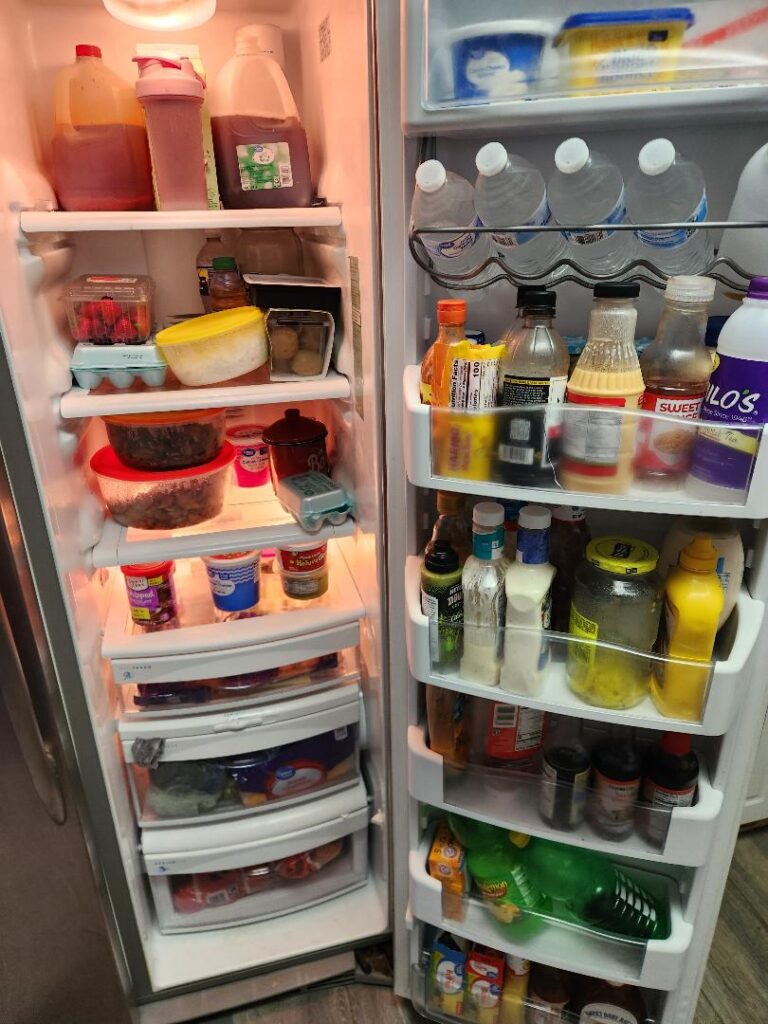
- Leftovers get pushed behind large milk cartons.
- Fresh vegetables disappear into the dark depths of the crisper drawer.
- A container of cooked chicken gets hidden by newer, more exciting meals.
Nothing spoiled because you were careless. It spoiled because you couldn’t see it.
Visibility is one of the most overlooked parts of household management. If you can’t see something, your brain acts as though it doesn’t exist. That’s true whether we’re talking about canned soup in the pantry or strawberries in the refrigerator.
The food you see first is usually the food you eat first. Design your refrigerator accordingly.
Step 1: Choose One Spot
Your Eat-Me-First area doesn’t need to be fancy—it just needs to be consistent. Choose a location where everyone in the household naturally looks:
- The Top Shelf: Eye-level is eat-level. If it’s the first thing you see when you open the door, it’s more likely to be the first thing you’ll use.
- The “Eat Me” Bin: A simple, clear plastic container explicitly designated for high-priority items.
- A Dedicated Drawer: One refrigerator drawer reserved exclusively for foods that should be used soon.
- The Counter Basket: A prominent basket for produce that doesn’t require refrigeration, like bananas, avocados, or stone fruit.
The exact location matters far less than using the same place every time. Once everyone in the household knows where to look, food stops getting forgotten.
Step 2: Know What Belongs There
The Eat-Me-First zone isn’t for everything. It functions like an emergency room for ingredients nearing the edge. If you know you’ll need to use something within the next 48 to 72 hours, it belongs here.
| Category | High-Priority Items to Move to the Zone |
|---|---|
| Proteins & Dairy | Leftovers, open packages of lunch meat, half-used blocks of cheese, yogurt nearing its best-by date, milk approaching its best-by date. |
| Fresh Produce | Berries, cut vegetables, prepared bag salads, fresh herbs, overripe fruit. |
| Bakery & Prepared Foods | Bread beginning to dry out, opened dips, cooked grains, prepared side dishes. |
Remember that best-by dates are generally about quality, not safety. The purpose of an Eat-Me-First zone isn’t to throw food away because a date is approaching—it’s to make sure perfectly good food gets enjoyed while it’s still at its best.
Step 3: Build the Habits
Check It Before Every Meal
This is the simplest habit in the entire system. Before making breakfast, lunch, or dinner, look in the Eat-Me-First section. Only after checking should you start planning your meal.
You don’t have to build every dinner around one leftover container, but you might realize the spinach belongs in tonight’s pasta, yesterday’s taco meat would make a quick lunch, or the cooked rice can become fried rice instead of going into the trash.
Rotate New Food Behind Older Food
Grocery stores call it stock rotation; our grandparents simply called it common sense. Whenever you buy more of something you already have—like yogurt, eggs, butter, or canned goods—place the newer package behind the older one. The oldest food stays in front where it’s naturally used first.
It’s a small habit, but over time it keeps perfectly good food from quietly expiring behind newer purchases.
Give Leftovers a Deadline
Leftovers don’t become less edible because they’re ignored; they become less appealing. The longer they sit, the easier they are to forget.
Give leftovers a simple deadline. If they haven’t been eaten within two days, make a definitive plan for them. Turn roast chicken into soup, toss cooked vegetables into an omelet, or freeze portions you realistically won’t eat this week.
Hope is not a preservation method.
If you don’t have a plan, leftovers usually become tomorrow’s science experiment.
Don’t Overfill the Refrigerator
A refrigerator packed tightly from front to back wastes more food than one that’s only three-quarters full. When every shelf is crowded, food disappears. Air also circulates less efficiently, making it harder to maintain even temperatures.
Keeping a little open space isn’t wasted storage; it’s what allows you to see what you’ve already bought.
Sometimes owning slightly less food means using far more of it.
Make It a Household Habit
An Eat-Me-First system only works if everyone knows it exists. Teach children where leftovers belong. Ask family members to check the designated area before opening something new. Encourage everyone to move items there when they notice something should be used soon.
A capable household doesn’t depend on one person remembering everything. It depends on simple systems that everyone can follow.
Small Habit, Big Results
An Eat-Me-First system won’t transform your grocery budget overnight, but it changes something more important: your awareness. You begin noticing what you already have before thinking about what you need to buy. You waste less because you’re paying attention instead of relying on memory.
Stewardship isn’t built through grand gestures. It’s built one ordinary decision at a time, often by using what you already have before reaching for something new.
A well-run household isn’t one that never buys food. It’s one that respects the food it already has.
You don’t need a larger refrigerator or a better memory. You just need a system that makes the right choice the easy choice.
💡 The 2-Minute Quick-Start Challenge
Don’t wait for your next grocery haul to start. Walk to your refrigerator right now. Find three items that need to be eaten in the next few days, clear a small space on your top shelf, and move them there.
Congratulations—you’ve just built your Eat-Me-First system.
Where to Go Next
An Eat-Me-First system is one of the simplest ways to waste less food, but it’s only one piece of the puzzle. Small habits—how you shop, cook, store leftovers, and plan meals—work together to make a real difference over time.
In the next article, we’ll look at practical ways to reduce food waste without adding complicated routines or making your kitchen feel restrictive. You’ll learn how a few simple changes can help you save money, use more of what you buy, and build a household that naturally wastes less.
→ Read next: How to Reduce Food Waste Without Feeling Deprived
Join the Porch Sitters
A house becomes a home through the small things we choose to learn, make, repair, grow, and pass along. Those skills don’t disappear overnight, and they won’t return overnight either. They come back one season, once project, and one meal at a time.
That’s what the Porch Sitters are all about.
Each edition of The Front Porch brings practical homesteading skills, seasonal guidance, thoughtful encouragement, and new resources to help you build a more capable household. No clutter. No chasing every trend. Just timeless knowledge that still has a place in modern life.
If that sounds like the kind of home you’re building, we’d be glad to save you a seat.
Rediscover the skills that turn a house into a home.