Mulching 101: Save Water, Suppress Weeds, and Build a Healthier Garden
Here at Waste Not Want Not Homestead, we look at the natural world as a closed loop.
In a healthy forest or meadow, nobody shows up with a leaf blower or a plastic bag to haul away the debris. Nature builds its own resilience from the top down, dropping leaves, twigs, and organic matter onto the soil surface to create a protective blanket.
In the garden, we call this mulching.
Mulching 101 begins with understanding that mulch is more than a finishing touch used to make beds look tidy. It is one of the most powerful resource-saving and waste-reducing practices a gardener can adopt.
By using materials that are often discarded—such as fallen leaves, grass clippings, and cardboard—you can create a system that helps conserve water, suppress weeds, and support long-term soil health.
Let’s explore how mulch works, why it matters, and how to use it effectively.
Why Mulch Works
When you apply a proper layer of mulch to your garden beds, you change the environment at the soil surface in several beneficial ways.
Conserves Moisture
Bare soil is highly vulnerable to evaporation.
When direct sunlight and wind reach exposed soil, moisture is lost more quickly from the root zone.
A layer of mulch acts as a protective barrier between the soil and the elements.
Research consistently shows that mulched gardens lose less moisture to evaporation, helping plants stay hydrated longer between waterings.
This can be especially valuable during hot summer weather or periods of limited rainfall.
Suppresses Weeds
Most weed seeds require light to germinate successfully.
Mulch helps block sunlight from reaching the soil surface, making it more difficult for many weed seeds to sprout and grow.
While no mulch will eliminate weeds entirely, a properly mulched garden often requires significantly less weeding than one with bare soil.
Moderates Soil Temperature
Extreme temperature fluctuations can place stress on plant roots.
Mulch acts as an insulating layer that helps buffer the soil from rapid temperature changes.
During hot weather, mulched soil often remains cooler and more stable than exposed soil.
During colder months, mulch can help slow heat loss from the ground and provide some protection for plant roots and beneficial soil organisms.
Choosing Your Mulch: The “Waste Not” Menu
While you can purchase bagged mulch from a garden center, homesteading is often about making good use of resources already available around you.
Before spending money, look around your property or community for materials that can be repurposed as mulch.
| Mulch Type | Best Used For | Homestead Advantages | Watch Out For |
|---|---|---|---|
| Shredded Leaves | Vegetable beds, fruit trees, perennial borders | Free, readily available, supports earthworm activity | Shred them when possible to prevent matting |
| Straw | Vegetable gardens, pathways, around tomatoes and peppers | Lightweight, easy to spread, excellent ground cover | Ensure it is seed-free, free from herbicide contamination |
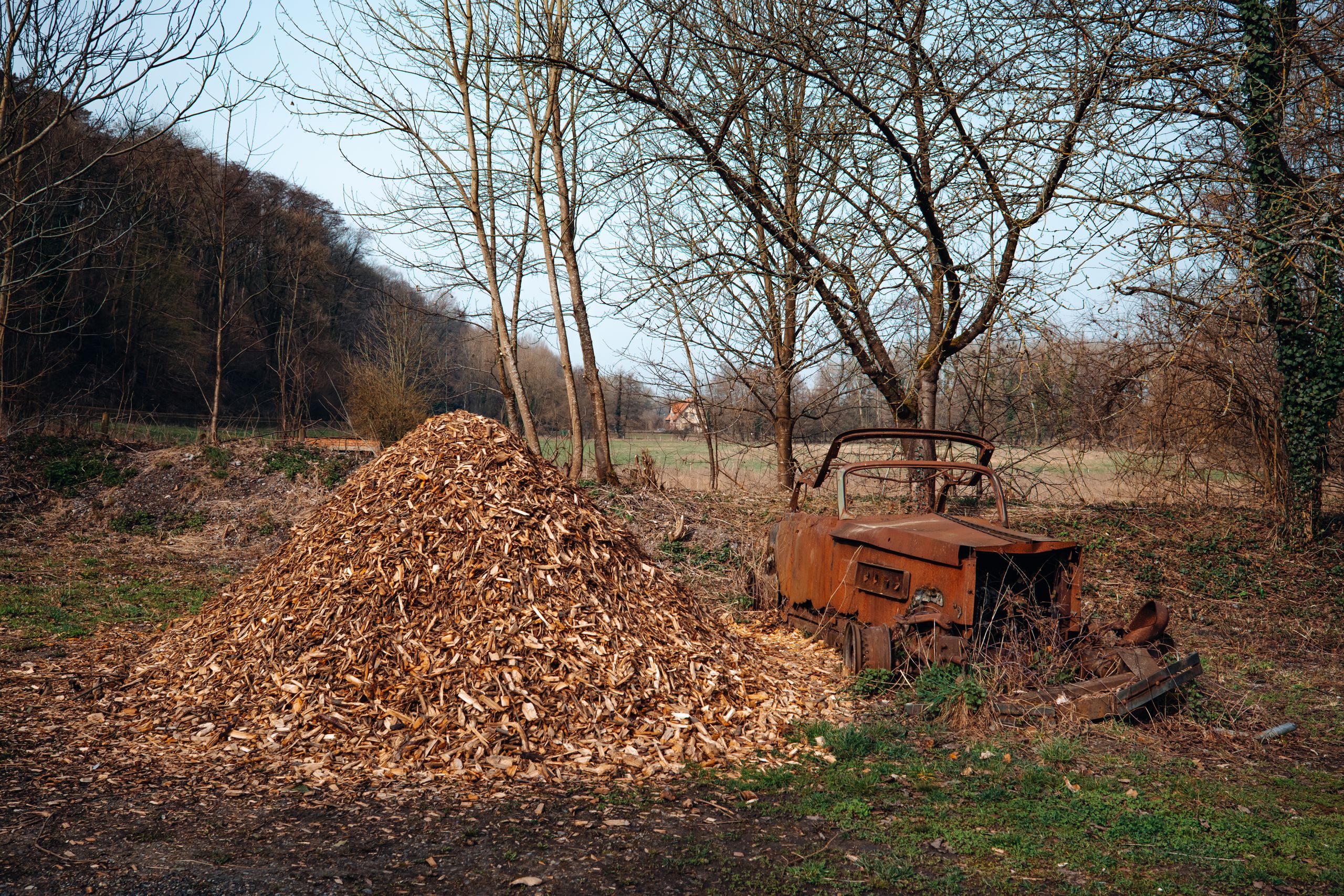
| Arborist Wood Chips | Pathways, berry patches, perennial beds | Long-lasting and often available for free from tree services | Keep on the soil surface rather than mixing in the soil |
| Grass Clippings | Annual vegetable beds in thin layers | Free and readily available during growing season | Use only from untreated lawns and avoid thick layers |
| Carboard or Newspaper | Weed suppression beneath other mulch layers | Reuses Materials that might otherwise be discarded | Remove tape, labels, glossy materials before use |
Mulching 101: How to Apply Mulch Correctly
Mulching is simple, but a few common mistakes can reduce its effectiveness.
Step 1: Clear the Area
Remove established weeds before applying mulch. If you’re creating a new garden bed or dealing with a heavily weedy area, a layer of plain cardboard can help suppress existing vegetation before mulch is added.
Step 2: Water First
Apply mulch after rainfall or after thoroughly watering the area.
Since mulch helps retain existing moisture, it’s best to begin with soil that is already adequately hydrated.
Step 3: Apply the Proper Depth
For most vegetable gardens and flower beds, a mulch depth of approximately two to three inches works well.
Very fine materials such as grass clippings may require thinner layers, while coarse materials like wood chips can often be applied slightly deeper.
Too little mulch may not provide enough benefit, while excessive mulch can restrict airflow and create overly damp conditions.
Step 4: Keep Mulch Away From Stems and Trunks
Avoid piling mulch directly against vegetable stems, shrub bases, or tree trunks.
Leaving a small gap around the base of the plant improves airflow and helps reduce the risk of rot, fungal problems, and pest issues.
This common mistake is often called creating a “mulch volcano,” and it can cause long-term problems for plants.
The Golden Rule of Mulching
Keep mulch on top of the soil, not mixed into it.
Materials such as wood chips break down gradually on the soil surface, where they mimic natural processes found in forests and grasslands.
When large amounts of undecomposed, high-carbon material are incorporated directly into the soil, microorganisms may temporarily use available nitrogen while breaking it down.
This can reduce the amount of nitrogen immediately available to plants. By allowing mulch to remain on the surface, you let nature—and the soil organisms beneath your feet—do the work for you.
Small Effort, Big Results
Mulching is one of those rare gardening practices that provides multiple benefits at the same time.
It helps conserve moisture, reduces weed pressure, moderates soil temperatures, and makes productive use of materials that might otherwise be discarded.
Most importantly, it encourages gardeners to think differently about “yard waste.”
Leaves, grass clippings, cardboard, and wood chips are not problems to be hauled away—they are resources waiting to be put to work.
That perspective lies at the heart of homesteading.
Join the Porch Sitters
A house becomes a home through the small things we choose to learn, make, repair, grow, and pass along. Those skills don’t disappear overnight, and they won’t return overnight either. They come back one season, once project, and one meal at a time.
That’s what the Porch Sitters are all about.
Each edition of The Front Porch brings practical homesteading skills, seasonal guidance, thoughtful encouragement, and new resources to help you build a more capable household. No clutter. No chasing every trend. Just timeless knowledge that still has a place in modern life.
If that sounds like the kind of home you’re building, we’d be glad to save you a seat.
Rediscover the skills that turn a house into a home.
Final Thoughts
A successful garden isn’t built only through what you add.
Often, it’s built by learning how to use what you already have.
By treating organic materials as valuable resources rather than waste, you can spend less time weeding, use water more efficiently, and create healthier growing conditions for your plants.
Sometimes the simplest gardening practices are also the most effective.
And when you learn to work with natural systems rather than against them, you’re rediscovering one of the timeless skills that helps turn a house into a home.
Coming Next in Sustainable Organic Gardening: 10 Mistakes Every New Gardener Makes (and How to Avoid Them)
Now that you’ve learned how to conserve water, suppress weeds, and protect soil with mulch, we’ll look at some of the most common mistakes that trip up new gardeners—and how to avoid them from the start.